What Does Time and a Half Mean? How to Calculate Overtime Pay
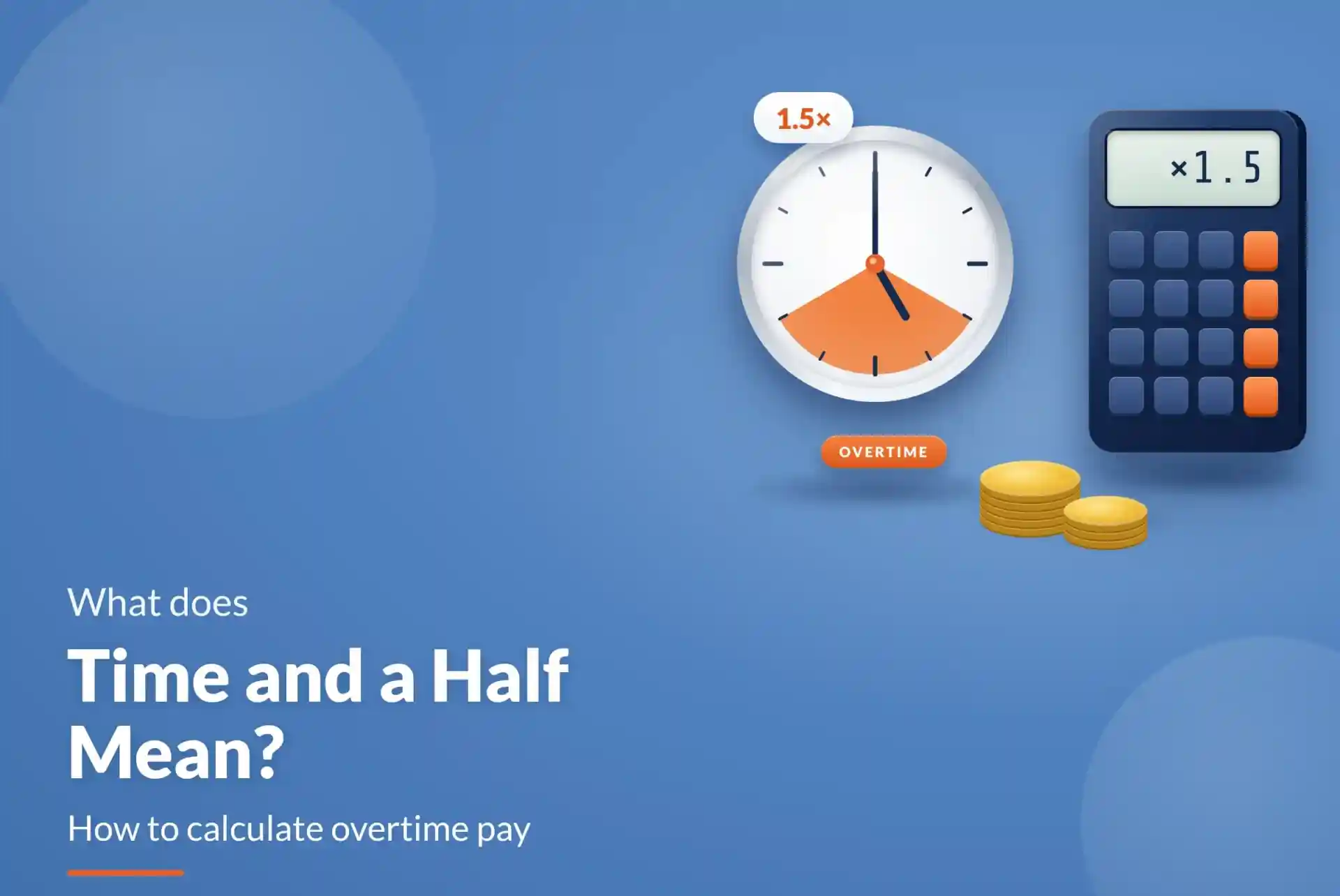
Time and a half means paying an employee 1.5 times their regular rate for overtime hours. Under the federal Fair Labor Standards Act, non-exempt employees earn it for every hour worked beyond 40 in a workweek. An employee who makes $20 an hour earns $30 for each overtime hour.
The math is simple. Getting it right every week is harder, because the answer depends on which hours count, how your workweek is defined, and what the employee’s regular rate actually is. This guide walks through each one with worked examples.
How to Calculate Time and a Half
Multiply the regular hourly rate by 1.5, then multiply that by the overtime hours.
Overtime pay = regular rate × 1.5 × overtime hours
Here is a full week for an employee paid $18 an hour who works 46 hours:
| Line | Calculation | Amount |
|---|---|---|
| Regular pay | 40 hours × $18 | $720.00 |
| Overtime rate | $18 × 1.5 | $27.00 per hour |
| Overtime pay | 6 hours × $27 | $162.00 |
| Total for the week | $720 + $162 | $882.00 |
What Counts Toward the 40 Hours?
Only hours actually worked count toward the federal overtime threshold. Paid time off that was not worked, such as holiday, vacation or sick pay, does not push an employee into overtime under federal rules. Your company can choose to count it, but it is not required.
Short rest breaks are a common source of confusion. Breaks of about 5 to 20 minutes are paid work time and count toward the 40. A bona fide meal period, typically 30 minutes or more with the employee fully relieved of duty, does not.
The workweek itself is a fixed, recurring period of seven consecutive 24-hour days. It does not have to run Sunday to Saturday, but once you set it, it stays put. Each workweek stands alone, so a 50-hour week cannot be averaged against a 30-hour week to avoid overtime.
Is Time and a Half Required on Weekends and Holidays?
Not under federal law. Working a Saturday, a Sunday or a holiday does not by itself trigger overtime. It only counts if the total for the workweek goes past 40 hours.
Many employers pay a premium for weekend or holiday work anyway, either as company policy or under a union agreement. If you do, write the rule down and apply it the same way for everyone. The time clock software should apply it automatically, so nobody has to remember which Monday was a holiday.
Daily Overtime and Double Time
A few states go further than federal law. California is the best-known example: non-exempt employees there earn time and a half for hours over eight in a workday, and double time in some longer shifts. If you have employees in more than one state, confirm each state’s rules, because a weekly total that looks fine federally can still owe daily overtime.
The Regular Rate Is Not Always the Base Wage
Time and a half is calculated on the regular rate, and the regular rate can be higher than the hourly wage. Most nondiscretionary bonuses, such as a production or attendance bonus the employee expects to receive, have to be folded in.
Take the same employee: $18 an hour, 46 hours, plus a $50 attendance bonus.
- Straight-time earnings: 46 × $18 = $828, plus the $50 bonus = $878.
- Regular rate: $878 ÷ 46 hours = $19.09 an hour.
- Overtime premium: half the regular rate × overtime hours = $9.54 × 6 = $57.26.
- Total for the week: $878 + $57.26 = $935.26.
Paying overtime on the $18 base alone would have shorted this employee $3.26. Small on one check, but it repeats on every bonus week for every employee who gets one.
Common Overtime Mistakes
- Offering comp time instead of pay. Private-sector employers generally cannot give time off later in place of overtime pay.
- Averaging across a pay period. Overtime is calculated per workweek, even when you pay every two weeks.
- Missing the minutes before and after a shift. Work done before clocking in or after clocking out still counts.
- Leaving bonuses out of the regular rate. See the worked example above.
Every one of these comes down to the same thing: a punch record that shows exactly when each employee started and stopped, sorted into the right workweek. When that record is complete, overtime is a calculation. When it isn’t, overtime becomes an argument.
Next Steps
Pyramid Time Systems has kept hourly workplaces on the clock for more than 50 years. Our time and attendance software applies your workweek, overtime and holiday rules to every punch automatically, and keeps a record you can pull up for any week an employee asks about.
Frequently Asked Questions
What Is Time and a Half for $15 an Hour?
$22.50 an hour. Multiply $15 by 1.5 to get the overtime rate.
Can an Employee Agree to Give Up Overtime Pay?
No. The right to federal overtime pay cannot be waived, even if the employee signs an agreement or offers to work extra hours at straight time.
Do I Have to Pay Overtime I Did Not Approve?
Yes. If an employee worked the hours and you knew or should have known, the time is owed at the overtime rate. You can address unapproved overtime through your policy and discipline process, but not by withholding pay.
Does Overtime Reset Every Week or Every Pay Period?
Every workweek. If you run biweekly payroll, calculate overtime separately for each of the two weeks.
Is Overtime Always Time and a Half?
Under federal law, yes: 1.5 times the regular rate. Double time is not required federally, though some states require it in certain situations and some employers offer it by policy or contract.